CORPORATE SOCIAL RESPONSIBILITY
Traffic Chart is a product with a public purpose, and this is how we make good on it.
01 THE MODEL
Those who can pay, pay for those who cannot
Our CSR policy does not live in a separate annual report. It lives in the price list. A municipality processing hundreds of permit applications a year buys a licence. A volunteer drawing the route for a village walk or a street barbecue pays nothing. In practice, the first group funds the second.
That is a deliberate choice, not a temporary campaign. A traffic plan is a legal requirement even for an event with 200 visitors and a few hundred euros in the till. The moment that plan can only be produced with expensive software or a hired consultancy, the small events that keep a village or a neighbourhood alive are exactly the ones that disappear. We are not interested in helping that along.
The sponsorship in sport and culture comes out of the same pot. No separate foundation, no complicated structure. It sits on the budget of Traffic Chart B.V.
What separates this from a marketing budget is what happens when things get tight. You cut advertising in a thin quarter. These commitments run for multiple years and do not come up for debate at the next budget round. A team or a club that loses a sponsor halfway through a season has a problem no press release will fix.
02 FREE FOR NON-PROFITS
More than 100 initiatives pay nothing
Right now, more than 100 non-profit initiatives use Traffic Chart without a licence. Village fairs, amateur cycling races, charity runs, Christmas markets, school walks, and street parties. They get the same editor, the same up-to-date road-sign catalogue for their country, and the same permit-ready PDF as a municipality or a contractor.
On top of that, the event-map module is free for every organiser, even where no licence exists anywhere in the chain. Laying out stages, fencing, emergency exits, first-aid posts, and catering costs you nothing. That is not a trial version, that is the module itself.
The reasoning is simple. A plan that arrives in the right format saves the municipality work. A municipality that spends less time on small applications has more time for the large ones. The volunteer drawing that plan is not a cost, they are the person making the whole system work.
There is no hidden ceiling either. You do not hit a paywall after ten drawings, your PDF does not come out watermarked, and no screen appears pushing you towards a subscription as your event grows. A race that goes from 300 to 3,000 visitors keeps drawing for free.
Where it ends up
The numbers behind the social side of Traffic Chart, alongside the licences that pay for it.
03 SNOWBOARDING
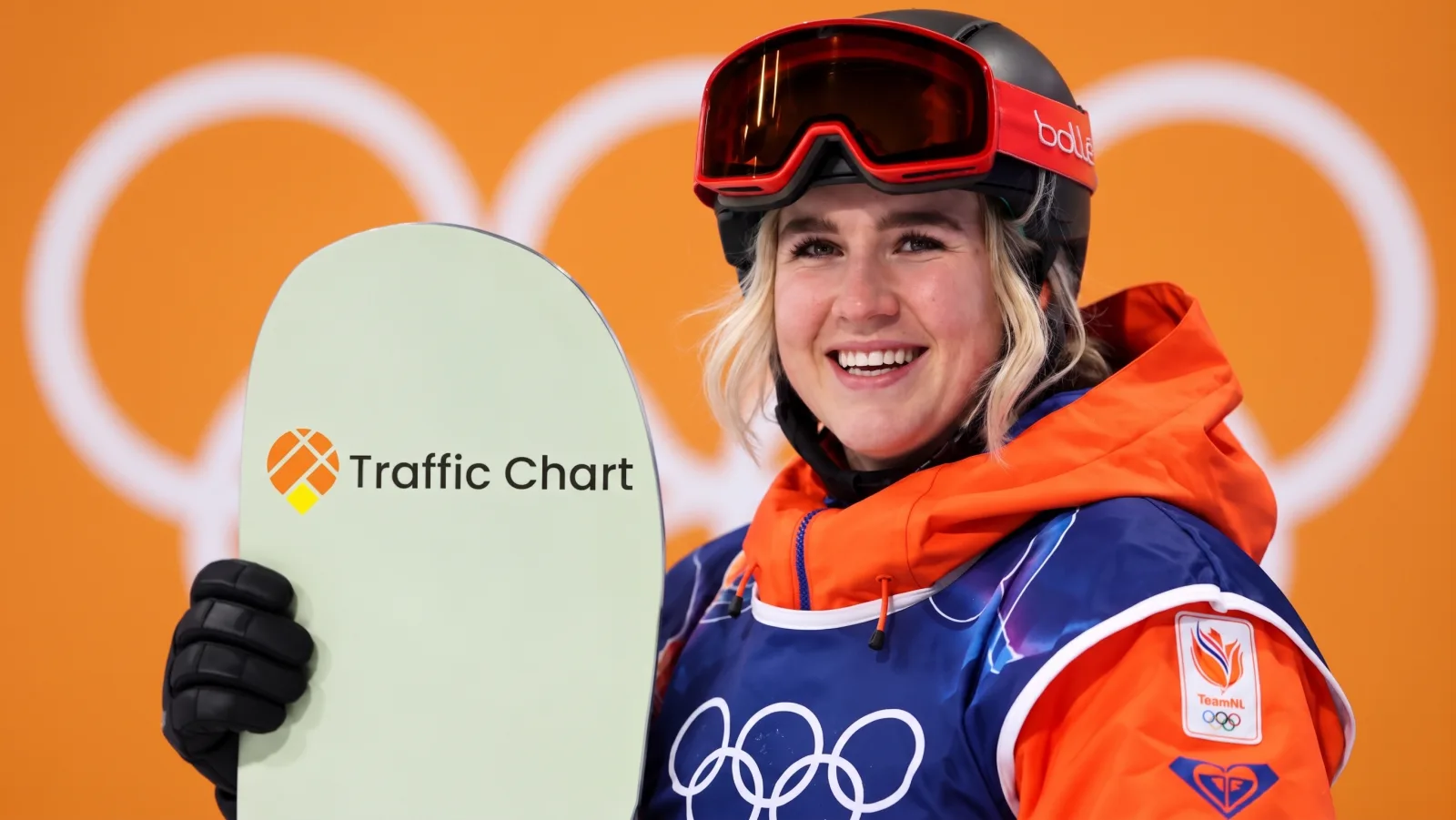
Melissa Peperkamp
Our logo sits on the board of snowboarder Melissa Peperkamp. She rides for TeamNL, the Dutch Olympic team, and competes in freestyle snowboarding, a discipline where the top of the world is a handful of people and the budgets are anything but guaranteed.
Elite sport at this level is largely self-funded. Travel, equipment, coaching, and recovery cost money that a small sport does not automatically have. A logo on a board is not an advert that has to earn itself back in demo requests. It is a contribution to someone who trains full time for years to get a few minutes on an Olympic course.
For a company that makes its living from events, that follows naturally. No sport, no events. No events, no Traffic Chart.
04 SPEED SKATING
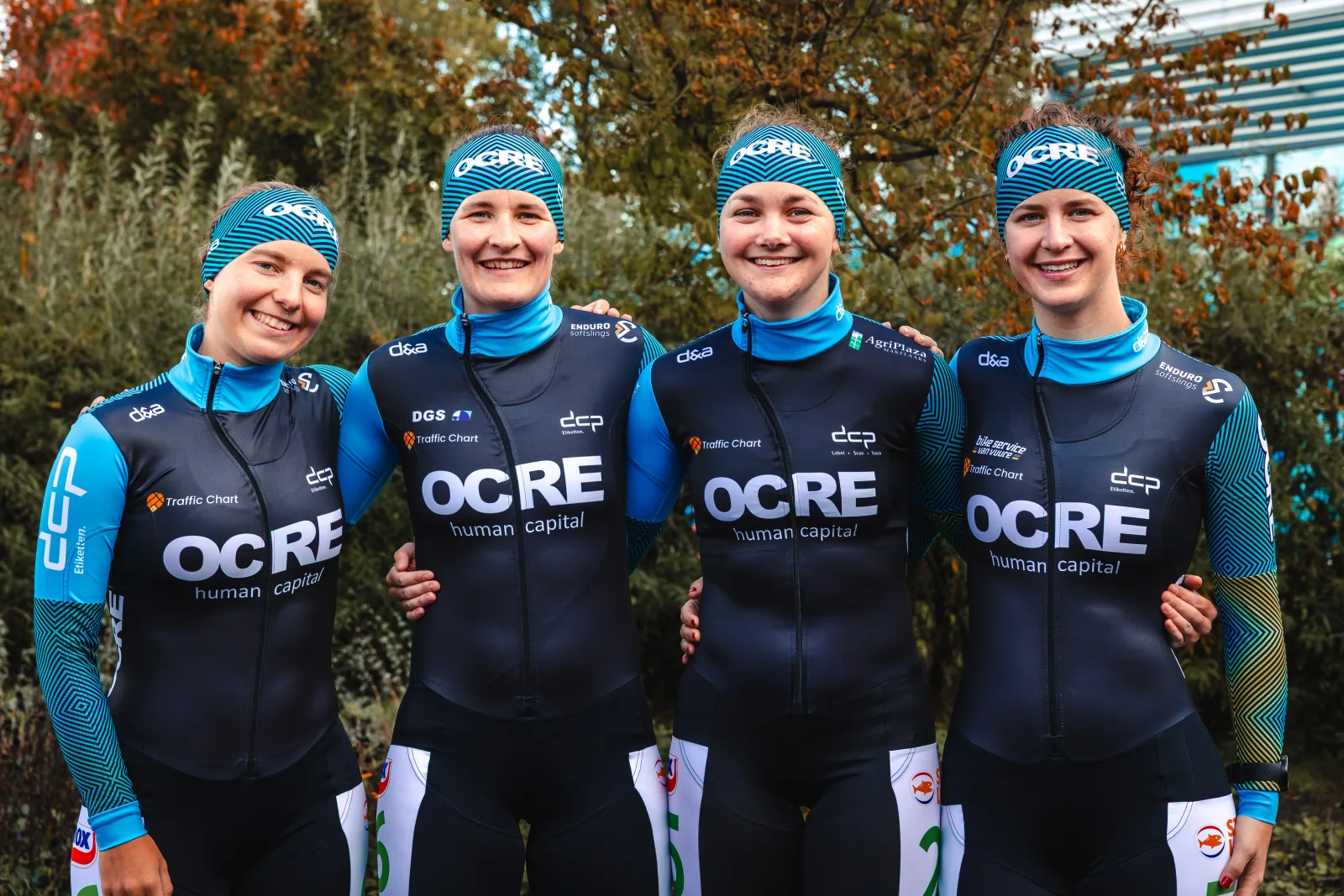
Skating team OCRE human capital
Our logo is on the suits of skating team OCRE human capital. It is a women's team, and that is not a detail: in speed skating, the budgets and the media attention on the women's side are structurally smaller than on the men's, while the training load is identical.
A team like this runs on a row of small and mid-sized sponsors who together make a season possible. None of those companies could carry it alone. If one drops out, the whole season is at risk. That is why we commit for several years here rather than race by race.
What appeals to us is that it follows the same logic as our own product: many small contributions adding up to something nobody could manage on their own.
05 FOOTBALL
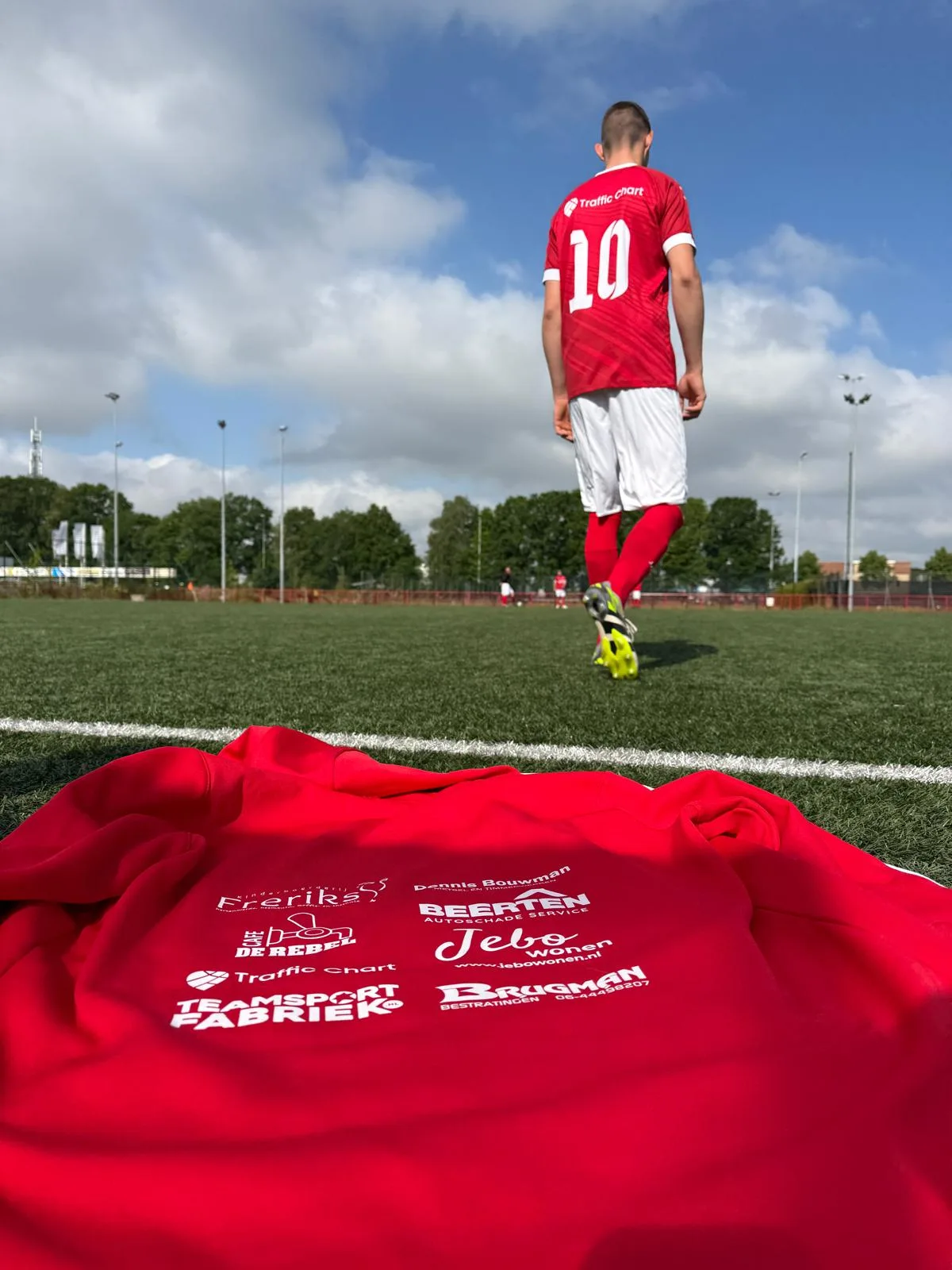
SV Eefde, the club down the road
Our Dutch office is in Eefde, a village in the east of the Netherlands. SV Eefde is that village's football club, a few minutes away. We are on the kit and on the sweaters, in between the local childcare centre, the car body shop, and the paving contractors.
This is the least glamorous of the three sponsorships and the one we would least want to drop. The sponsor board and the logo on the back are the visible half. The other half is that the club, like every other association, uses the software for free whenever something needs arranging on or around the pitch. A company that puts its name on a shirt and then charges the club full price for software is advertising, not supporting.
06 HOW TO ARRANGE IT
Requesting free access as an association
There is no application form with attachments and no committee taking a month over it. You create an account, you email us what you organise, and we switch you to a non-profit account. In practice that is settled the same day.
We do not ask for articles of association, a chamber-of-commerce extract, or an annual statement. The test is whether your event runs without a profit motive and on volunteers. A neighbourhood committee, a sports club, a scout group, a church, a school, or a parish council all clear that bar.
What you get afterwards is the full editor. You draw your diversions with the current signs for your country, you lay out your site map with stages, fencing, and emergency services, and you export a PDF the authority can assess without having to ask questions about it first. Same files, same quality, and same support as any paying user.
07 FEDERATIONS AND CULTURE
Partner to the bodies that carry the sport
Alongside the three projects above, we are a partner and sponsor of organisations that hold up an entire branch of sport or events. Among them the Dutch cycling federation KNWU, the athletics federation Atletiekunie, the Dutch Triathlon Federation, Le Champion, the Event Safety Institute, the Royal Association of Orange Societies, and Evenementencollectief Friesland.
That last group is perhaps the clearest example of what we mean by corporate social responsibility. The Orange Societies organise national holidays and commemorations in hundreds of villages, almost entirely on volunteers. Every one of those activities needs a traffic plan. When that plan becomes unaffordable or too complicated, it is not the plan that disappears, it is the event.
If you organise something yourself and want to know where you stand, start at traffic plans for event organisers. If you work for a public authority and want to see how those free submissions reach you, that is covered on Traffic Chart for municipalities.
Frequently asked questions about our CSR policy
What we do and do not do on corporate social responsibility, and how to make use of it yourself.
How much of your revenue goes to charity and sponsorship?
When do I count as a non-profit initiative?
Is the event map genuinely free, or is that a trial period?
Is there something expected in return?
Why sponsor sport rather than, say, climate projects?
Can my club apply for sponsorship too?
What about sustainability in the environmental sense?
Does my authority get a discount for handling many non-profit submissions?
How do you choose which sports projects to back?
Does this policy apply outside the Netherlands?
Read more
About us, our mission and team →
Traffic Chart is built by event & mobility pros with 16+ years of experience in events and infrastructure. Used by 10,000+ organisers and councils.
Standardised traffic plans for municipalities →
Centralised intake for traffic plans and event maps from residents and organisers. Standardised format, in-dashboard review, 3x faster approvals.
Event maps in minutes, 100% free →
100% free drag-and-drop event map editor with scaled objects, zones and routes. Export as PDF, share by URL. 10,000+ EU event organisers, no paywall.